European positive psychology conference in Copenhagen: arriving, opening speeches & reception (first post)
Originally added on Thu, 24/06/2010 - 03:58Last updated on Mon, 05/07/2010 - 05:34
I flew into Copenhagen yesterday afternoon. I have a low key good feeling about the place. Nice. Clean. Small enough not to feel overwhelmed. Friendly. How appropriate that Denmark, the hosts of this "5th European conference on positive psychology", have so often been ranked top in the world on life satisfaction. See for example Christensen et al's paper "Why Danes are smug: comparative study of life satisfaction in the European Union." I walked from Central Station to register at the conference and then on to the little hotel I'm staying in to dum
Berlin weekend: approaches to happiness
Originally added on Sat, 12/12/2009 - 05:18Last updated on Tue, 15/12/2009 - 06:36
Berlin, Saturday morning. We flew in from Edinburgh pretty early yesterday. Direct flight. Easy. Guilt over air travel a little allayed by buying carbon offsets through ClimateCare. We're staying in a Miniloft, one of the really nice set of self-catering apartments designed by Matthew Griffin & Brita Jurgens, an architect couple whose practice is up at the top of the building.
Recent research: two studies on depression, one on sex, & three on positive psychology
Originally added on Thu, 24/09/2009 - 04:50Last updated on Tue, 06/10/2009 - 04:59
Here are half a dozen research papers that have recently interested me (all details & abstracts to these studies are given further down this blog posting). The first by Fournier et al is about whether to choose antidepressants or psychotherapy to treat depression. They found that marriage, unemployment and having experienced a greater number of recent life events all predicted a better response to cognitive therapy than to antidepressants. In the second study Luby et al looked at depression in children aged between 3 and 6 years old. Worryingly they found forms of depression even in kids this young. They also found over two years of follow-up that "Preschool depression, similar to childhood depression, is not a developmentally transient syndrome but rather shows chronicity and/or recurrence." Hopefully this kind of research will mean these troubled children have a bit more chance of being identified and helped.
Autogenic training: sixth session
Originally added on Mon, 21/09/2009 - 05:35Last updated on Tue, 29/09/2009 - 05:38
Here are the handouts, recordings, and reflection/record sheets for the sixth Autogenic training session. There are four overlapping themes to this 'lesson'. Obviously a key issue is the next Autogenic Training step - the focus on the abdominal area. I usually initially get trainees to put a hand or both hands on their abdomen when they are learning this exercise. The hand(s) are positioned a little below the belly button, unless the trainee has specific abdominal symptoms - when positioning the hand(s) over the troublesome area may be more appropriate. The hand(s) don't have to be in direct contact with the skin. A sense of gentle, warm contact through clothing is fine. This typically helps one focus on the abdominal area and the hand contact also merges easily with the feeling of belly relaxation and warmth that one begins to allow.
- e e cummingsI thank you God for most this amazing day: for the leaping greenly spirits of the trees, and a blue true dream of sky; and for everything which is natural which is infinite which is yes.
Autogenic training, session 6
Here are the handouts, recordings, and reflection/record sheets for the sixth Autogenic training session. There are four overlapping themes to this 'lesson'. Obviously a key issue is the next Autogenic Training step - the focus on the abdominal area. I usually initially get trainees to put a hand or both hands on their abdomen when they are learning this exercise. The hand(s) are positioned a little below the belly button, unless the trainee has specific abdominal symptoms - when positioning the hand(s) over the troublesome area may be more appropriate. The hand(s) don't have to be in direct contact with the skin. A sense of gentle, warm contact through clothing is fine. This typically helps one focus on the abdominal area and the hand contact also merges easily with the feeling of belly relaxation and warmth that one begins to allow.
Further Pages
Four aspects model & some associated evidence for relaxation, meditation & imagery
Originally added on Sun, 13/09/2009 - 05:09Last updated on Fri, 25/09/2009 - 04:32
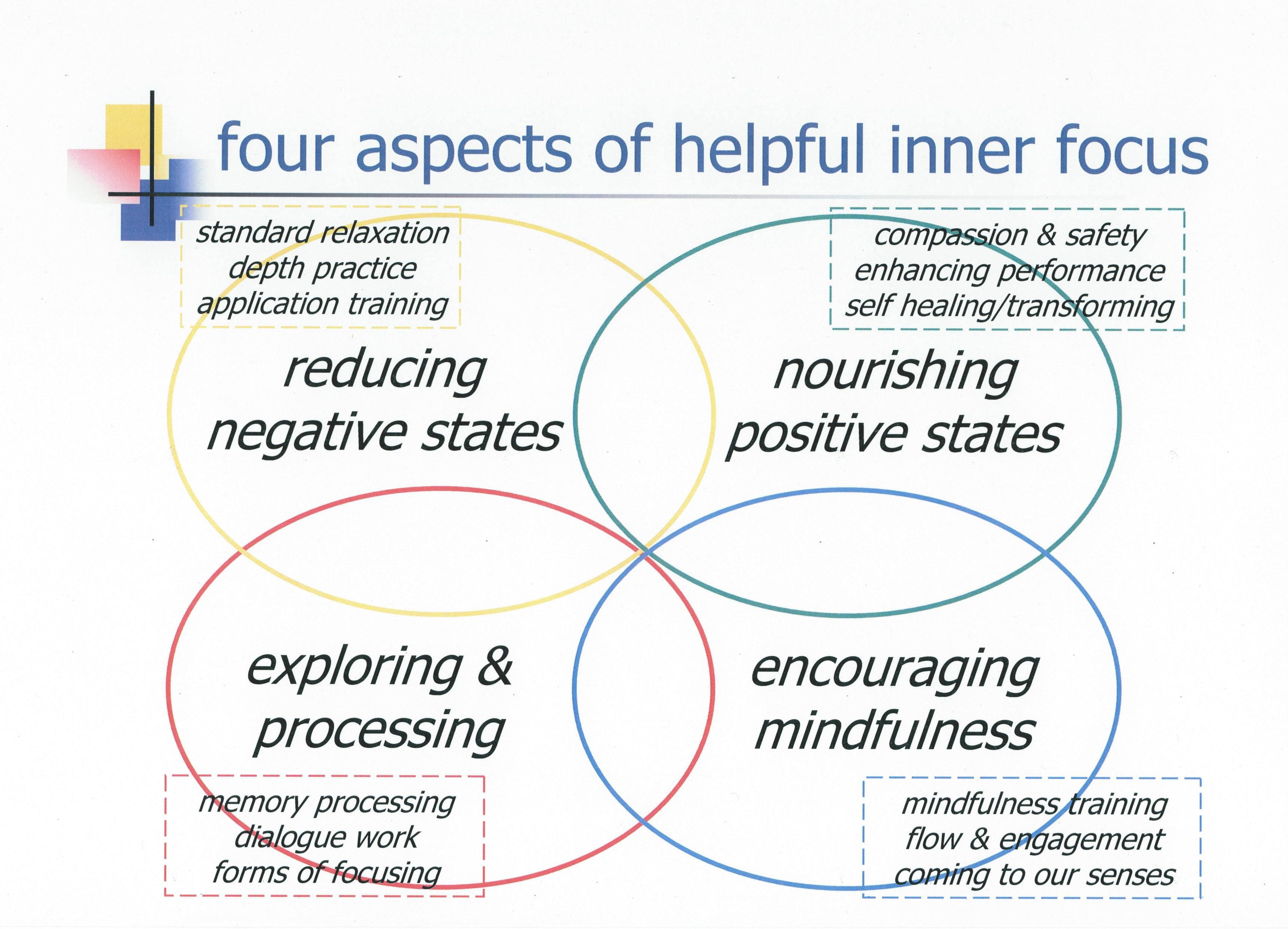
Relaxation, meditation, mindfulness, hypnosis, imagery and other associated methods form a complex, loosely interlinked field. The "Four aspects of helpful inner focus" model, that I've put together to help me make more sense of this territory, looks like this:
For a downloadable copy of this diagram click here. There is a fair amount of data supporting most of these methods. To give some examples:
Autogenic training: third session
Originally added on Mon, 17/08/2009 - 06:10Last updated on Thu, 03/09/2009 - 06:13
Keep your face always toward the sunshine - and shadows will fall behind you.- Walt Whitman
Exeter pre-conference workshop: Ed Watkins on CBT treatment for anxious & depressive rumination
Originally added on Wed, 15/07/2009 - 05:07Last updated on Sun, 11/04/2010 - 06:48
Exeter. I really like the way that the British Association for Behavioural and Cognitive Psychotherapies (BABCP) conferences rotate around a whole series of UK university towns. This is the 37th BABCP Annual Conference, and I guess I've been to a dozen or more of them over the years. They tend to follow a similar pattern - beginning with a choice of optional one day workshops, followed by two and a half days or so of conference proper. There are about 20 one day workshops to choose from this year, and I've plumped for Ed Watkins's "CBT to treat anxious and depressive rumination" (click on the workshop title for a fuller description).
Walking in Glen Affric: emotions, anxiety & risk (third post)
Originally added on Wed, 22/04/2009 - 11:22Last updated on Sat, 02/05/2009 - 05:56
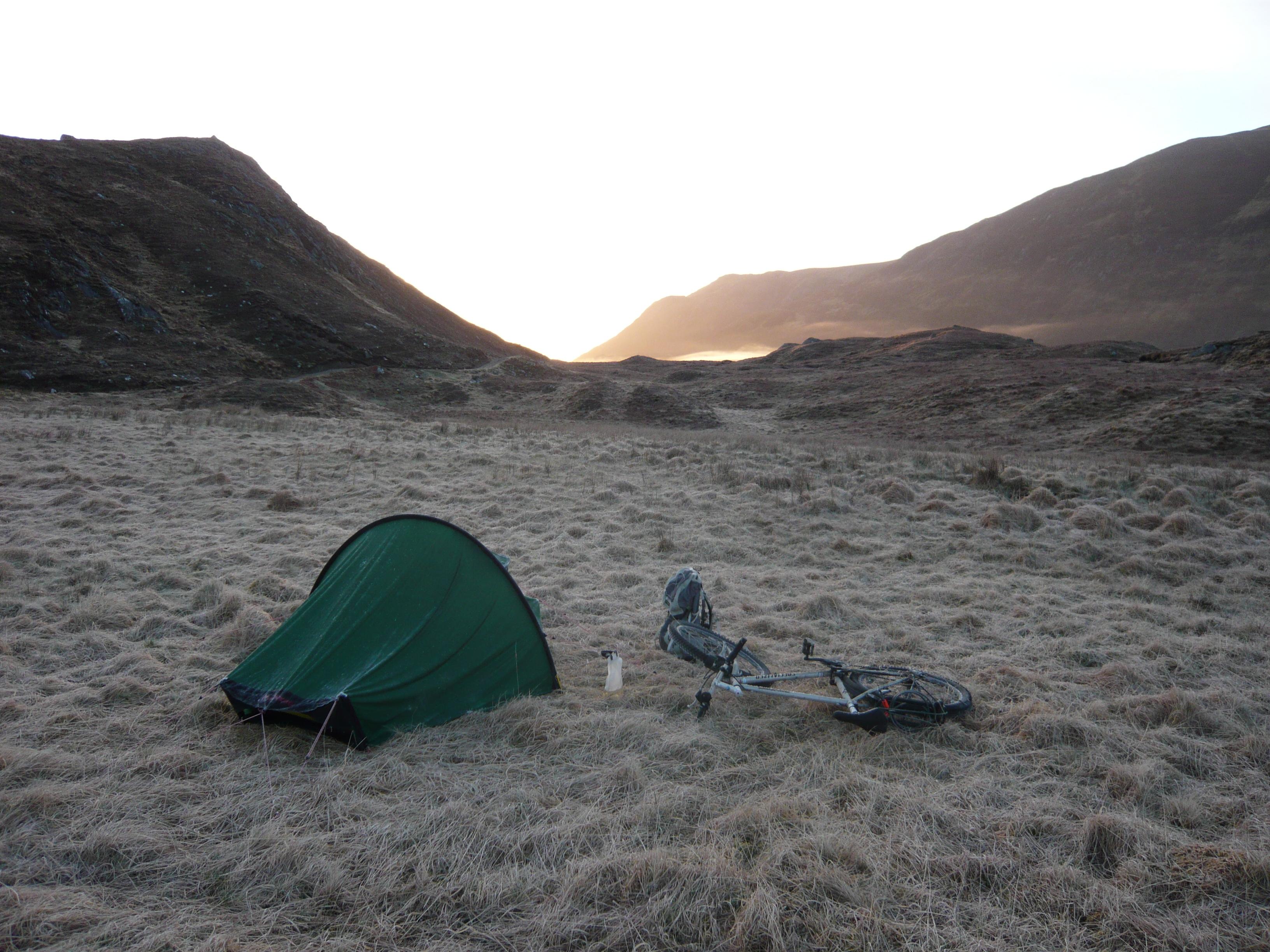
Today was huge. I woke early, cold. It had been such a clear, starlit night. My socks, that I'd washed through in the stream and tried to dry a bit yesterday, had frozen solid. So too my walking boots with hard frozen laces. Rub and mould the socks till I can get them onto my feet, and back into the sleeping bag to warm them a bit.