Ch.7: Families
“ Circumstances are beyond human control, but our conduct is in our own power. ” - Benjamin Disraeli




“ Circumstances are beyond human control, but our conduct is in our own power. ” - Benjamin Disraeli
A couple of days ago I wrote a blog post that I think makes a very important point - "Emerging research on diet suggests it's startingly important in the prevention of anxiety & depression". Much of what the post said is downloadable in Powerpoint and can be printed out as a six-slides-to-a-page handout that looks like this:
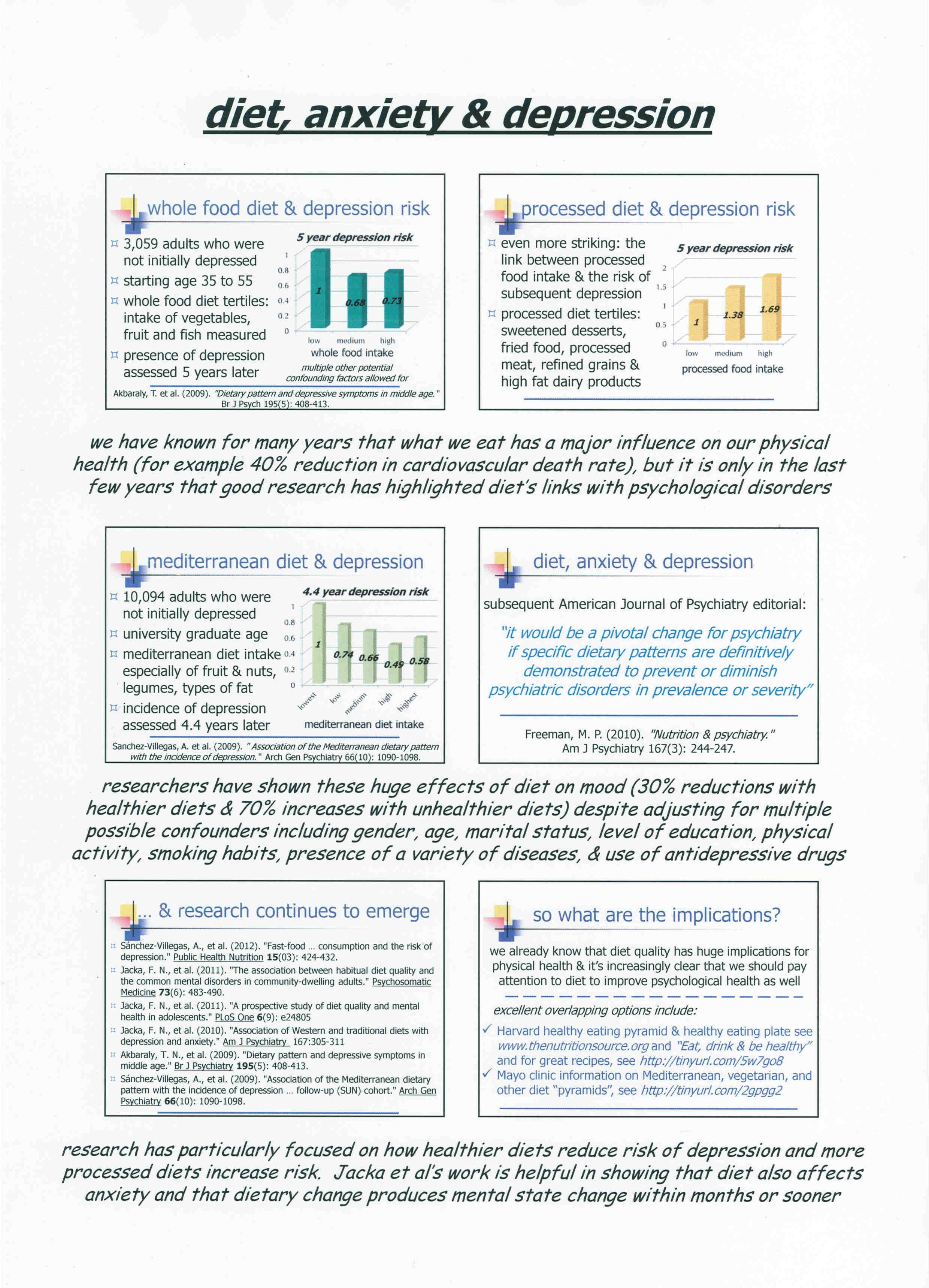
The key points of this blog post can be downloaded & printed out as a helpful 6-slide-miniatures-to-a-page Powerpoint handout.
The UK branch of UNICEF very recently stated "In 2007, UNICEF's child well-being report put the issue of child well-being firmly on the UK's political agenda. When compared with 20 other OECD countries, including substantially poorer ones, the UK was at the bottom of the league table of child well-being. Subsequent reports have shown that inequality among children in the UK is greater than in other countries. UNICEF UK commissioned Ipsos MORI and Dr Agnes Nairn to explore some of the reasons behind these statistics by comparing children's experiences in the UK with those of children in Spain and Sweden."
This is a very brief blog entry to signpost a couple of recent National Institute for Health and Clinical Excellence (NICE) guidelines on the management of bed-wetting in children & young people (up to age 19), and on the prevention of osteoporosis in adults. These are both subjects that I'm sometimes asked about, and high quality, up-to-date, evidence-based advice is well worthwhile.
Here are half a dozen recent research studies - two on aspects of mindfulness, two on sobering prevalence rates, one on imagery in health anxiety, and one on CBT with children. Fuller details, links and abstracts for all studies are listed further down this page. Willem Kuyken and colleagues looked at "How does mindfulness-based cognitive therapy (MBCT) work?" in helping recurrent depression sufferers. They came up with some fascinating and provocative findings. For example it appears that MBCT acts differently from standard CBT, although they are both helpful in reducing risk of depressive relapse. Standard CBT (and maintenance antidepressants too) reduce cognitive reactivity to experiences of induced low mood, and this appears important in how they lessen relapse risk. MBCT however seems to act not by reducing cognitive reactivity so much as by decoupling the reactivity from a tendency then to slide into depression. It appears this decoupling is mediate
I posted yesterday on the first, "Needs" section of the "Needs, beliefs, behaviours" diagram (below). Today I want to say a little about the second section of the diagram - "Beliefs".
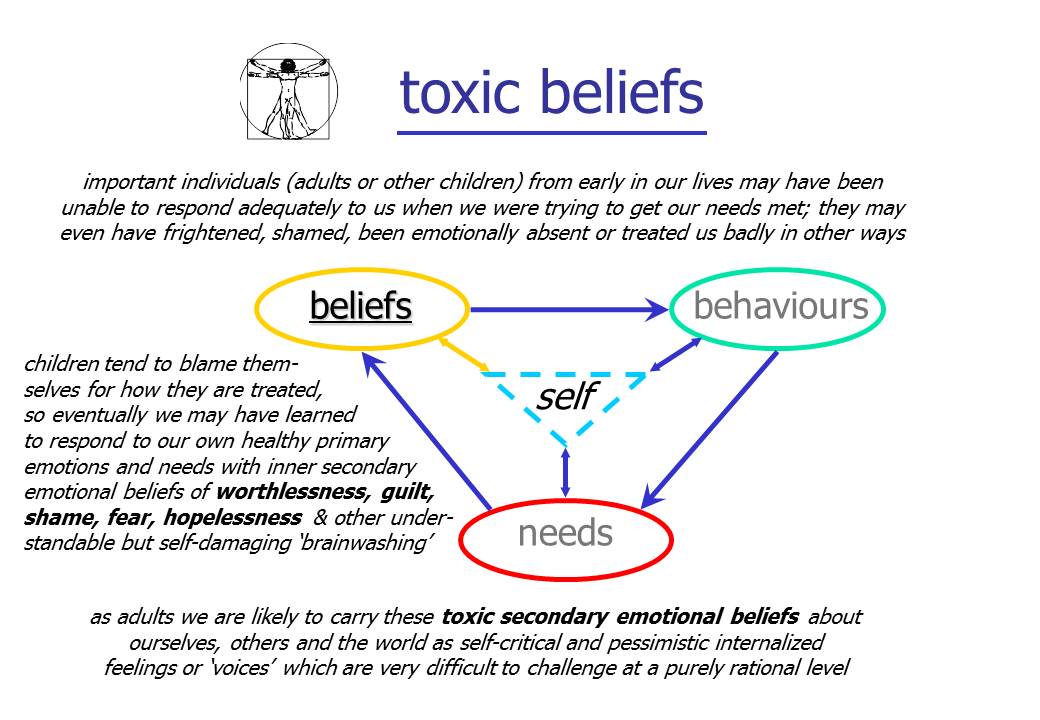
This diagram is downloadable both as a Powerpoint slide and as a PDF file.
