COVID-19: some useful websites
Originally added on 21st March 2020
Last updated on 7th August 2023
Last updated on 7th August 2023




Yesterday was the first full day of the two & a half day (plus one day of pre-conference workshops) BABCP summer conference in Glasgow. It feels like I've been going to these annual BABCP get-togethers for a thousand years. In so many ways, I think they're great ... although, for a society that prides itself on being evidence-based (more on this later in this post), I do think that the way these conferences are delivered is pretty dusty & traditional. Basically we sit in large tiered lecture halls and listen to major plenary lectures or we sit in smaller rooms for workshops that are very largely just lectures in more extended formats.
Yesterday's post and today's are combined and downloadable as a Word doc or as a PDF file.
I was asked by a friend to write a short piece on research evidence backing up therapeutic uses of reading & writing to be used in a local initiative supporting health workers in a diverse range of settings. Today's and tomorrow's post give the piece with hyperlinks to the various research studies that I mention. A combination of the two posts is downloadable as a Word doc or as a PDF file.
Well here's a good example of being taught by our patients. I've had two or three people, who come to see me, singing the praises of the C25K NHS website. The site states that "Our C25K plan is designed to get just about anyone off the couch and running 5km in nine weeks." That looks good ... and both my patients and the numerous appreciative comments on the C25K website underline how helpful people have found the written advice and more especially the downloadable MP3 podcasts that are to be used when running.
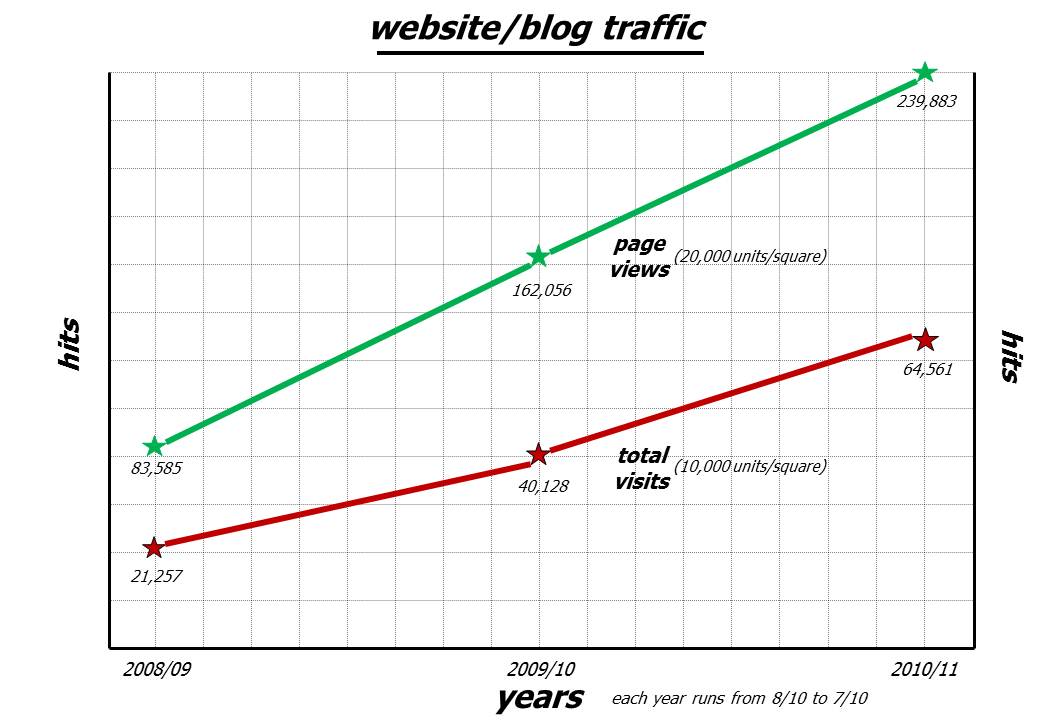
This blog went live on 8th October 2008. In the nearly three & a half years from then up until today, the blog & website (particularly the Good Knowledge section) have had 155,178 hits and 579,356 page views from 171 countries. The average visitor views about 4 pages on the site. The chart below illustrates the growth in traffic over the first three years (to 7th October 2011):
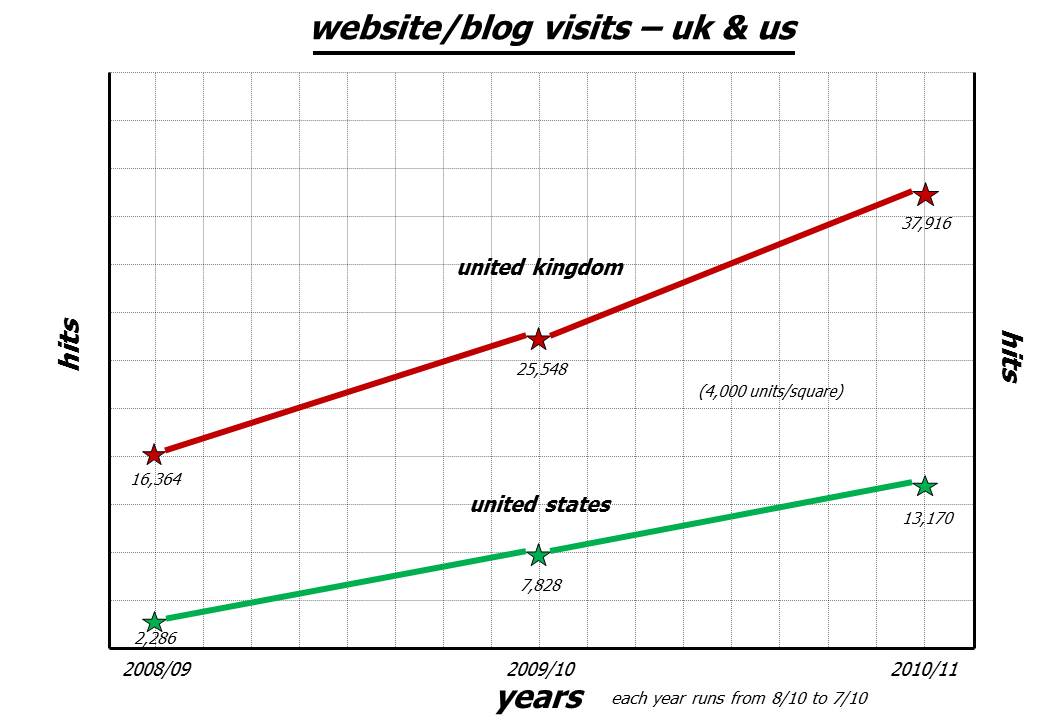
As I'd expect, most visitors come from the UK and, to some extent from the US:
Here are details of half a dozen recent research papers - two on relationships, two on body to mind effects, and two on mindfulness. Fuller details, links and abstracts of all the studies mentioned are given further down this post.
Here are three websites that I have recently found interesting. The first two are possibly more for therapists, while the third can be very helpful for therapists and general public alike.
The e-newsletter from Depression Alliance Scotland (DAS) popped into my inbox last week. What good work they do. The new information that particularly caught my eye was access to an online facilitated self-help course. The description runs: "We have a new service offering support for people to use Living Life to the Full Interactive, a computerised online self-help programme based on cognitive behaviour therapy. You will work through a six session course and a DAS staff member will be there to offer 4 - 6 short telephone contacts on an individual basis over 6 weeks to help you get the most out of it. Interested? Email info@dascot.org or call 0845 123 23 20"
