Ch.7: Families
“ Honest criticism is hard to take, particularly from a relative, a friend, an acquaintance, or a stranger. ” - Franklin Jones




“ Honest criticism is hard to take, particularly from a relative, a friend, an acquaintance, or a stranger. ” - Franklin Jones
I posted yesterday on the first, "Needs" section of the "Needs, beliefs, behaviours" diagram (below). Today I want to say a little about the second section of the diagram - "Beliefs".
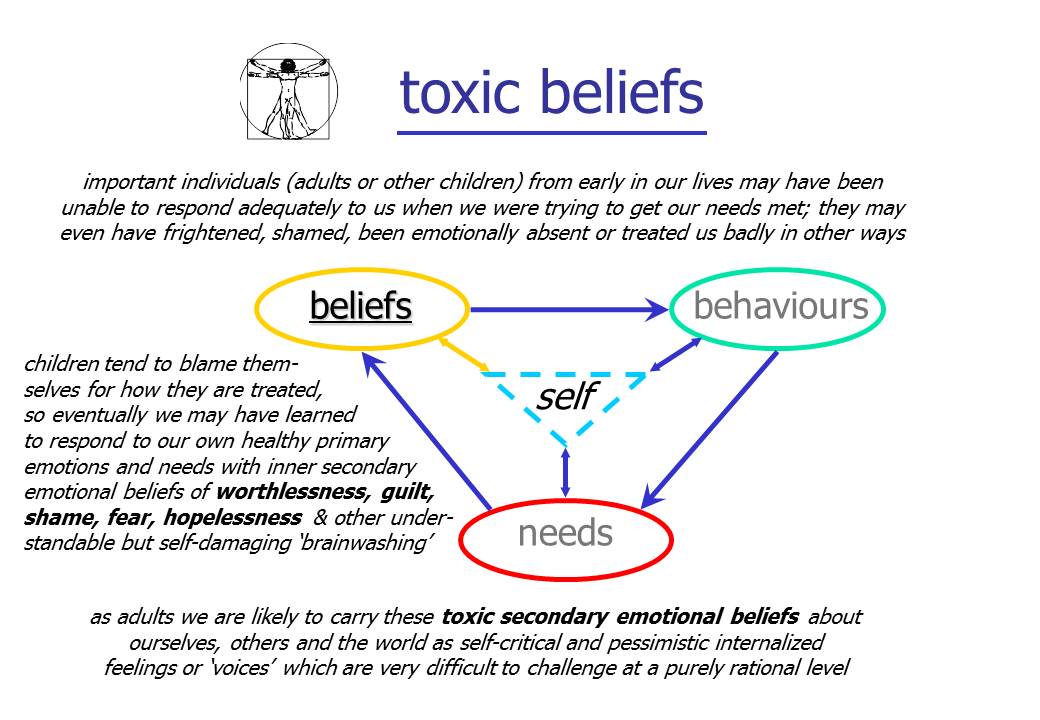
This diagram is downloadable both as a Powerpoint slide and as a PDF file.
This is the first of a series of four brief posts giving more information about a model I use a lot, especially when working with people who are trying to change long term personality patterns. The ideas aren't at all original, although this particular way of presenting them is my own. So the first step in the model is "needs". This is illustrated in the following diagram:
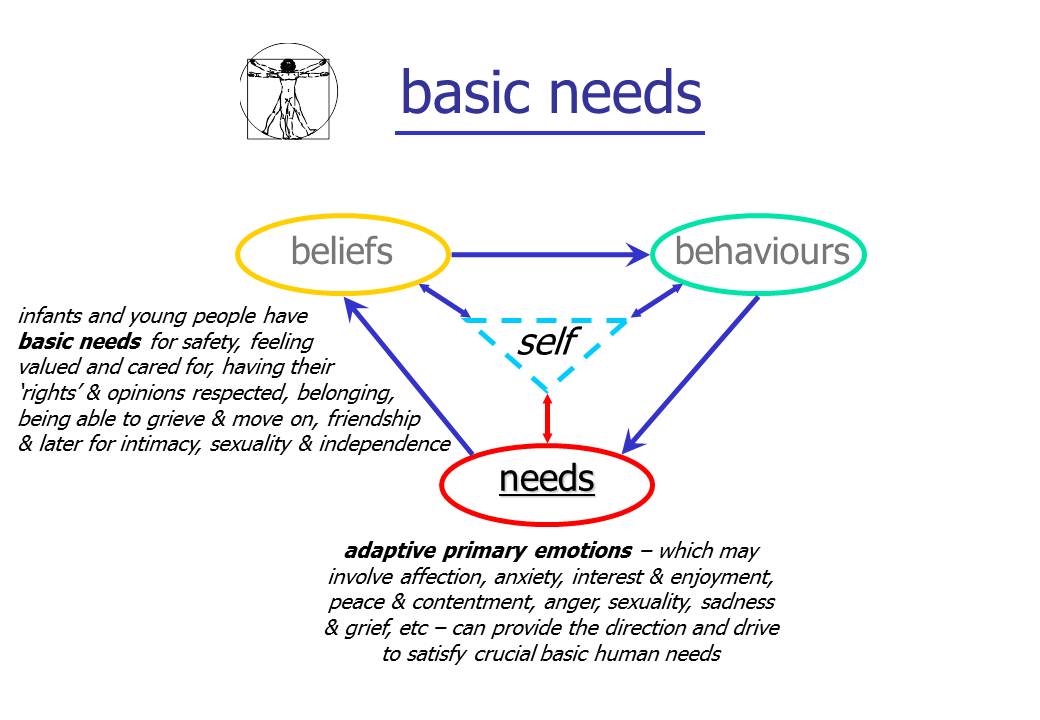
This diagram is downloadable both as a Powerpoint slide and as a PDF file.
The last morning of the group. I wake a bit "troubled". This is the ebb and flow of the group. Feelings tend to be more intense here. As the "group river" flows its four day course, I know that I'm likely to move through a series of different emotional states. I lie in bed for a bit sensing what I'm feeling. What's it about. The overall "smell/flavour" of my mood seems contributed to by a mix of things. One factor is that I feel, what seems to me, a low key grumbling unease going on between me and one of the other people in the group. A second factor is a discomfort I have about how another person expressed themselves for a while in the group yesterday. A third is a concern I'm feeling about another person seeming to get too "isolated" in the group. And there's something too about the group ending - both saying goodbye to the people and saying goodbye to this
On the 15th March 2010 my dear, precious mother Edie Hawkins died. She was 97 and I'm writing this post ten days later. After the funeral, after the flurry of forms and arrangements and visits and paperwork have quietened down.
I woke early this morning. Thought about her. A sense of her. She was an immensely kind, giving, determined, selfless person. This website wouldn't be here without the influence of her and my father, Jim Hawkins (who died back in 1989) - also such a generous, caring, thoughtful human being.
If you've found anything of value on this site - if it's helped you personally or in your work, please say an inner thank you to Edie and Jim. This website wouldn't be here if it wasn't for them and how they've influenced what I believe in and what I work for.
This post is also available as a Word format download.
Last week I wrote about "A couple of fine books on attachment". Today I want to highlight what a fantastic resource the internet is - below are details of half a dozen websites that offer lots of attachment information, and also details of further websites that are helpful but more limited.
I wrote earlier this month on "Attachment, compassion & relationships". I've been aware of John Bowlby's work on adult-child attachment for many years but, when I've approached it for insights that might help in my work as a psychotherapist, I've been put off by the complexity of assessment methods and variety of reported attachment styles, as well as by the rapidly growing size of the relevant academic literature. As Jude Cassidy and Phillip Shaver write in their preface to the 2008 meister work "Handbook of attachment (2nd ed)" - see more details at the end of this blog post - "Anybody who conducts a literature search on the topic of 'attachment' will turn up more than 10,000 entries since 1975, and the entries will be spread across scores of physiological, clinical, developmental, and social psychology journals, will include numerous
